Scheduling a structural poured installation requires monitoring ambient weather conditions and local seasonal temperature shifts closely. Property owners across the Pacific Northwest often wonder how local climate patterns impact freshly placed liquid concrete mixes. Pouring concrete during ideal temperature windows ensures proper chemical hydration, maximum compressive strength, and flawless surface finish quality. Knowing how hot or cold weather affects curing times helps prevent costly surface flaking, internal cracking, and structural failure. Smart property owners rely on experienced local builders who understand temperature management thoroughly.
The Ideal Temperature Window for Curing Concrete
Achieving maximum structural strength depends on maintaining optimal ambient temperature conditions throughout the initial pouring and curing process. The ideal temperature range for placing liquid mix spans from fifty to seventy degrees Fahrenheit. Furthermore, within this ideal window, the chemical reaction between water and cement compounds progresses at a controlled, uniform rate. Controlled hydration allows the crystalline matrix to form densely, producing exceptional long-term tensile strength and surface durability. Consequently, scheduling major pours during mild spring or early autumn weather yields optimal structural results.
Placing liquid mix when ambient temperatures fall outside recommended ranges requires specialized chemical additives and thermal protection measures. Pouring during marginal weather conditions between forty and fifty degrees slows chemical hydration significantly, delaying initial setting times. Professional hardscaping crews monitor daily temperature forecasts closely before dispatching ready-mix delivery trucks to job sites. In contrast, inexperienced workers often rush pours during adverse weather, compromising final structural strength and finish quality. Therefore, selecting optimal weather windows remains the safest choice for long-term slab value.
Cold Weather Pouring Challenges near Beaver Lake Preserve
Executing outdoor concrete pours during chilly winter months near Pine Lake Park or Beaver Lake Preserve presents serious freezing risks. When ambient temperatures drop below thirty-five degrees Fahrenheit, water inside fresh liquid mix freezes and expands rapidly. Freezing water disrupts the internal cement hydration bond permanently, reducing final structural strength by up to fifty percent. Unprotected fresh concrete exposed to freezing temperatures scales, crumbles, and fails within its first year of service.
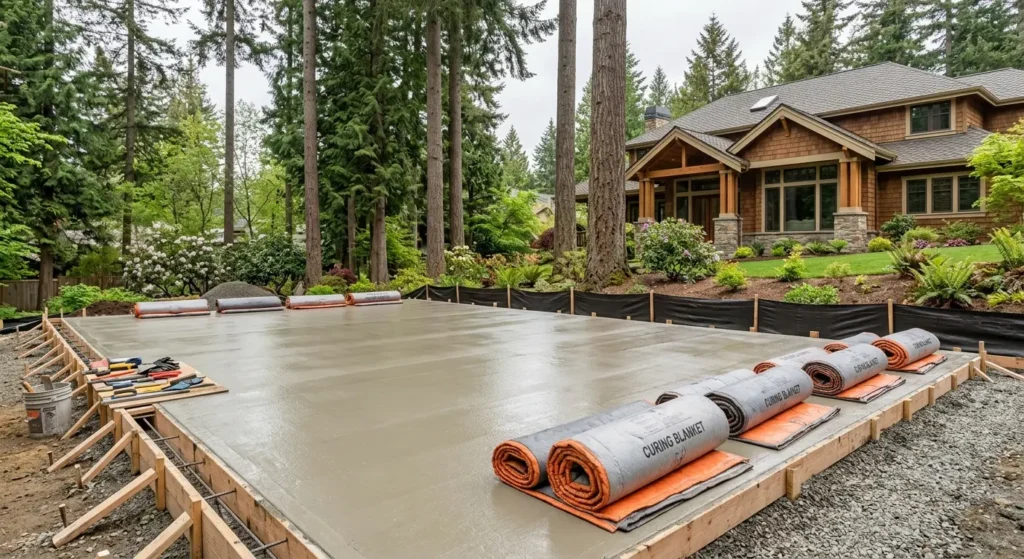
Professional hardscaping contractors utilize specialized cold-weather pouring protocols to protect fresh installations during colder seasons. Heated mixing water, chemical calcium chloride accelerators, and insulated thermal blankets preserve internal hydration heat throughout critical curing hours. Furthermore, insulating blankets remain draped over newly finished slabs for several days until internal compressive strength exceeds safety thresholds. Implementing cold-weather protective measures allows experienced crews to pour safely during colder months without sacrificing structural integrity. Investing in professional thermal management guarantees lasting slab durability through winter chills.
Hot Weather Precautions and Rapid Moisture Evaporation
While Sammamish experiences mild summers, warm summer days with temperatures exceeding eighty degrees Fahrenheit create different installation challenges. High ambient temperatures, low relative humidity, and steady breezes accelerate surface water evaporation from freshly placed liquid mix. Rapid surface drying causes plastic shrinkage cracks, flash setting, and difficult trowel finishing conditions for installation crews. Furthermore, rapid moisture loss deprives underlying cement of the water required for complete chemical hydration, weakening the finished slab matrix.
Experienced installation crews employ specialized hot-weather pouring techniques to manage rapid drying conditions effectively. Utilizing chemical set retarders in the mix slows chemical reactions, extending workable finishing time for craftspeople on site. Furthermore, applying liquid evaporation retarders across freshly troweled surfaces prevents rapid surface crusting and shrinkage cracking during hot summer afternoons. Meticulous moisture management ensures uniform curing from sub-base to top surface, delivering maximum compressive strength and surface resilience. Expert hot-weather techniques protect your hardscaping investment against thermal stress.
Evaluating Curing Compounds and Continuous Moisture Retention
Proper post-pour curing practices represent a vital final step in achieving maximum long-term concrete strength and surface durability. Applying high-grade liquid membrane curing compounds immediately after surface finishing seals internal moisture inside the slab during critical hydration days. Alternatively, continuous wet curing using saturated burlap covers or continuous misting hoses keeps fresh concrete damp for at least seven days. Maintaining adequate internal moisture allows cement hydration to continue building density for months following initial placement.
Neglecting proper post-pour curing practices allows surface moisture to evaporate prematurely, resulting in dusty, soft top surfaces that wear rapidly. Professional hardscaping specialists manage post-pour curing routines meticulously, ensuring your new driveway, patio, or walkway achieves its full rated strength. When searching for reliable concrete contractors near me, verifying their knowledge of seasonal curing protocols provides confidence in service quality. Selecting trade specialists who prioritize temperature and moisture control guarantees flawless, long-lasting hardscaping results.
Flawless Pours in Any Season with Sammamish Concrete Concepts
Managing seasonal temperatures and precise curing conditions demands deep chemical knowledge, specialized equipment, and extensive hands-on experience. At Sammamish Concrete Concepts, our dedicated team monitors climate forecasts meticulously to execute perfect poured installations across our community year-round. We utilize hot and cold weather mix adjustments, insulated curing blankets, high-performance set retarders, and quality sealing compounds tailored to Northwest climate demands. Whether you need a summer patio pour, a spring driveway installation, or cold-weather structural footings, we offer complete insurance protection, transparent pricing, and guaranteed structural strength. Contact Sammamish Concrete Concepts today to schedule your consultation and plan a perfectly timed project.